
Ideo’s Axioms for Starting Disruptive New Businesses
This is the first piece in our PATTERNS series by IDEO. Read more about the series here.
How do you build a business in an unproven market? How do you figure out what customers need when you’re delivering an experience they’ve never seen before? You begin where service and software companies have begun, by conducting fast, cheap experiments that help you understand your customers. You build on what you learn. In short, you prototype.
With ever-increasing competition, innovative businesses are finding that in order to stay competitive their offerings need to constantly evolve. And that to improve their offerings is to encourage consumer participation. This helps them build a competitive advantage by constantly revisiting what they deliver and how they deliver it. They know that traditional market testing will only validate their past successes. To understand the next big thing, companies have to engage with customers and react to their needs.
TAKE ACTION: Designing for Life’s Changes
1. Go early, go often
Building experimentation into your business is harder than you
think. Start small and stay focused. Try everything, but
don’t try it all in one prototype.
2. Learning by doing
Build value for the business as you prototype. If you fail, what
will you have learned? What will you salvage?
3. Inspiration through constraint
Don’t exhaust yourself searching for money and resources. The
tighter your constraints, the more creative your prototypes will
be.
4. Open to opportunity
Look for unanticipated ways customers are using your offering.
Their improvisations may be the future of your business.
THE EVIDENCE: Stories from Around the Globe
 Platform for Change
Companies like Apple and Facebook have learned to harness the energy of outside developers to create new applications. By allowing thousands of new applications to run on their platforms, they create a Darwinian environment where only the fittest survive.
Jeff, a developer, noticed that Facebook lacked reminders around birthdays, so he created Birthday Alert. Customers quickly made it one of the hottest apps on the platform. Instead of trying to guess what type of functionality users wanted, Facebook just tapped into smart developers like Jeff who built it for them.
Through this process, Facebook learned it needed a mechanism to
foster developers who could improve the overall ecosystem. Now the
Facebook Fund supports enterprising developers who are eager to
build their ideas.
How can you engage your customers and partners to help you
prototype new offerings?
Front-of-house Flexibility
The secret behind the unique feel of Whole Foods and Trader
Joe’s is how employees are empowered to cocreate the customer
experience. Each store establishes teams to figure out the best way
to serve customers, from the products they offer to the way
sections are organized. Each week, employees can see the results of
their experiments in the aisles.
Jesse recently joined the cheese department at Whole Foods and
one of his favorite jobs is to select the cheeses that customers
sample. He feels it helps set the mood of the entire store, and
when he nails the selection, the store usually sells the entire
stock. Giving teams the tools to constantly improve the business
creates an engaging and successful environment.
What control should you give up so your team is empowered?
Grassroots Growth
Ayr is a former scientist with an MBA from Harvard. After several years with McKinsey, he decided to follow his dream to create a chain of fast and friendly vegetarian restaurants.
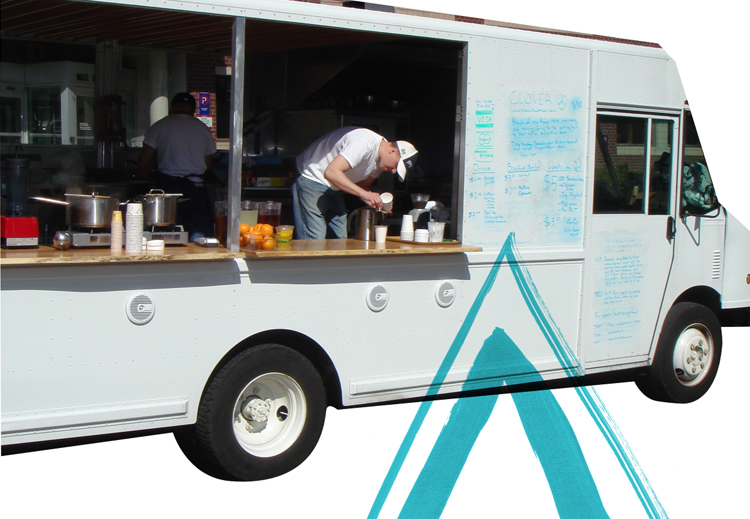
He could have hired a chef and tested his menu with focus groups, but instead he decided that it would be better to run a lot of experiments at low cost. So he launched his restaurant from a food truck parked outside the MIT campus, updating his customers about daily specials through text messages and blog posts.
After six months, the results have been phenomenal. By starting small and prototyping, Ayr is learning while he shapes his business. He’s adding additional trucks, developing permanent spaces, and has begun to cater special events. Each experiment brings him closer to his ultimate goal.
How can you intentionally limit your resources to create a more inspired offering?
Making Lemonade
Like many fashion houses, Gucci and Ann Taylor were hit hard during
the recent recession. The nation’s sudden shopping withdrawal
left many designers with too few retail orders to manufacture their
line. In similar circumstances, manufacturers will order the
additional garments and offer excess inventory in outlet malls and
discount retailers. This time things were different, demand was
much lower so the fashion houses got creative. Taking advantage of
empty retail space many designers negotiated short, temporary
leases in high-traffic areas. In this short stay space they opened
pop-up shops to connect with customers. The recession could have
distanced these designers from their customers but quick, nimble
moves created new opportunities to engage.
How can you turn your biggest challenge into an opportunity to try
something new?
Real-time Results
Internet companies routinely use their constant connections with
customers to prototype new offerings. Companies like Google and
Amazon routinely select pools of users and change the functionality
in their products (e.g., you may be looking at a different Gmail
interface than your friends). Depending on specific behavioral
metrics, Google may change a product without ever directly asking
the customer. Smart and nimble businesses know that always-on and
always-accessible allows them to learn and evolve.
How can you experiment on the fly and learn without compromising
experience?
Ongoing Experimentation
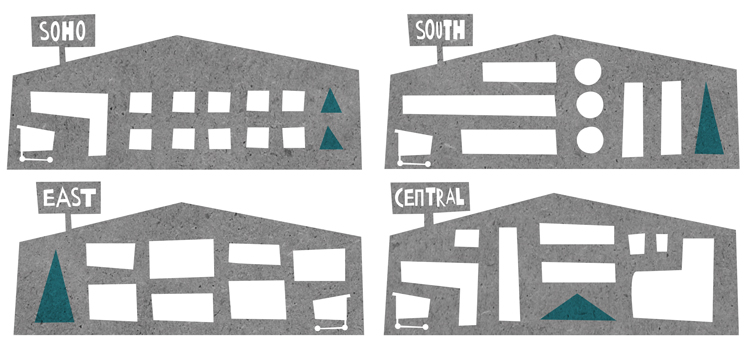
McDonald’s has built prototyping into its organization. Since the company does not want every employee in every store deviating from service patterns, it has set up test restaurants to try new menu items, new pricing strategies, and new food preparation methods. This flexibility has paid off. McDonald’s has been able to roll out worldwide menu expansions in just a few months—quite a feat for a company that serves 47 million customers a day.
How can you build experimentation into the culture of your organization?
Name my Book
Tim Ferriss loved the playful working title of his first book, Drug
Dealing for Fun and Profit, but it was too racy for Walmart and
other retailers. With the success of the book hinging on this
decision, Tim decided to prototype. He drafted a shortlist of
titles and bought Google AdWords. Each online click equaled one
vote. Within a week, he had his title, and The 4-Hour Work
Week was finally finished.
How much information do you need to make decisions? Can prototyping help you get there faster?
Be a Pattern Spotter
Now that you’ve been exposed to a few different examples,
don’t be surprised if you start seeing Life’s Changes
patterns all around. Keep your eyes open and let us know what you
find, especially if it’s the next new pattern.
PATTERNS are a collection of shared thoughts, insights, and observations gathered by IDEO through their work and the world around them. Read more pieces from the series here.
Colin Raney leads the Business Design Community within IDEO. He specializes in designing new ventures for clients based on new technologies or unique insights. He believes that good business is good design—successful businesses require offerings, brands, services, and strategies that complement each other.

